The 95/5 Rule Is a Content Routing Problem, Not a Budget Slogan
The 95/5 rule is not a reason to choose brand or lead generation. It is a design constraint: separate memory-building content from buying-stage proof, then route intent signals into the right next step.

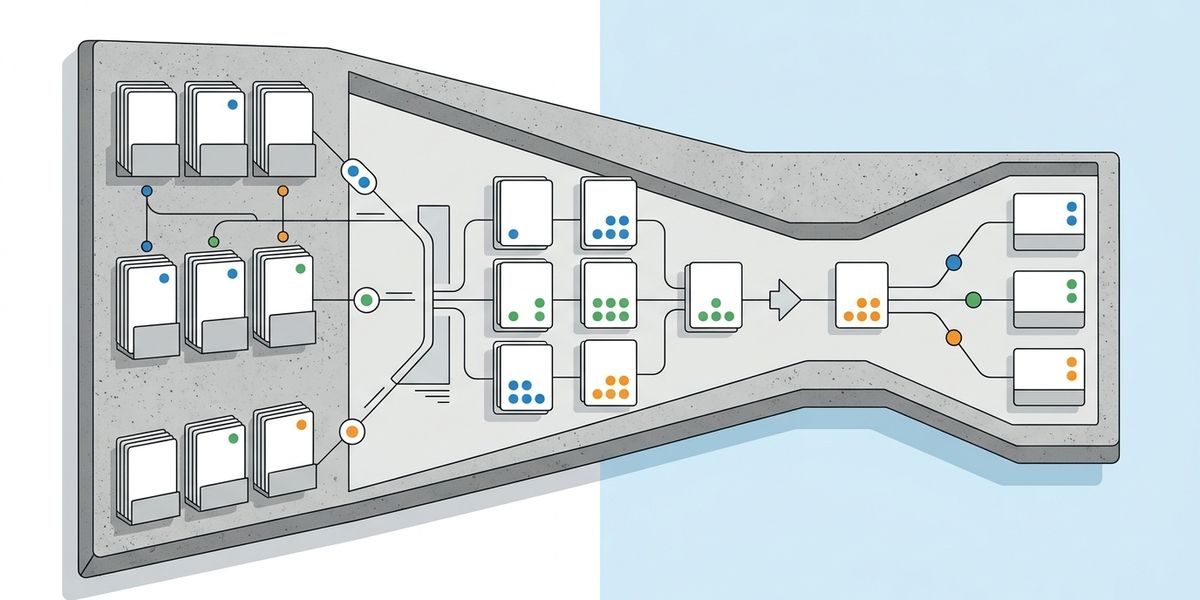
Most demand-generation teams do not have a lead problem. They have a routing problem: the same campaign is expected to make future buyers remember the brand, help active buyers evaluate it, and give sales a reason to call today.
The 95/5 rule is useful because it exposes that category error. It is not a budget slogan and it is not permission to stop capturing demand. It is a design constraint: content for people who may buy later should not be judged by the same job, format, or conversion event as content for people already researching.
Treat the 95/5 rule as two content jobs
The LinkedIn B2B Institute describes the rule as a reminder that 95% (Why You Should Follow the 95-5 Rule) of potential buyers are out of market while only 5% (same source) are actively buying. The practical implication is not “spend everything on reach.” It is “stop asking every impression to behave like a demo request.”
The out-of-market job is memory formation. Make the problem recognisable, attach your brand to a useful buying situation, and repeat distinctive cues across channels. The in-market job is risk reduction. Give an active buying group evidence, comparisons, implementation detail, and a clear next step.
Those jobs can support one another, but they should not share one scoreboard. A broad educational asset may be doing its job when it creates branded search, direct visits, or assisted return visits. A late-stage guide may be doing its job when it produces a qualified conversation. If both are optimised for form volume, the system will favour the asset that harvests existing demand and starve the one that creates future preference. That is why a reach-to-revenue signal ladder needs explicit stages instead of one blended KPI.
Build a handoff, not a funnel-shaped content pile
Ehrenberg-Bass frames B2B growth around mental availability—being easy to think of in buying situations—and physical availability—being easy to find and buy (How B2B Brands Grow). That gives demand generation a sharper operating model than a generic top-, middle-, and bottom-funnel content calendar.
Start with the buying situations your category wants to own. For each one, create a recognisable point of view, a small set of recurring proof points, and a distribution pattern that reaches buyers before they raise their hands. Then create a separate evidence path for the moment a buyer moves from “this is a problem” to “we need to evaluate options.”
The handoff trigger should be behavioural, not merely chronological. An account repeatedly consuming implementation content, returning to comparison pages, or showing a topic surge is telling you that the message should change. It is not automatically telling you to send a sales sequence. The next experience might be a diagnostic, a technical explainer, or a buying-group checklist that turns anonymous interest into useful context.
Use intent to change the message, not to shrink the market
Bombora describes intent as a way to see when a business is consuming content around a topic more than usual, then use that signal to prioritise outreach and personalise content (Using Intent Data for Your Demand Generation Strategy). That is a better use of intent than treating a vendor score as a list of people who are ready for a pitch.
A workable routing model has three states. For broad category activity, keep the message educational and distinctive. For high-fit accounts showing a research shift, offer a specific proof asset and coordinate a light sales touch. For accounts with direct evaluation behaviour, make the next step commercial.
For LinkedIn activation, treat matched audiences as a QA surface rather than a magic segment; the CRM segment playbook is a useful reference.
Demandbase makes the same caution from another angle: intent signals need fit and context before they become actionable (Predictive Intent Data). A topic spike from a poor-fit account is not a priority. A fit account with one anonymous visit is not a buying committee. Combine account fit, topic, role, first-party behaviour, and prior engagement before changing the treatment.
Measure preference before the form appears
6sense’s 2025 buyer research reports that 94% of buying groups rank their shortlist before engaging sellers (The B2B Buyer Experience Report for 2025). It also reports that the vendor contacted first wins nearly 80% of deals (same 6sense report). These are not forecasts for your company; they are a warning about where lead-generation reporting starts too late.
Track the leading indicators that connect memory to active demand: branded search, direct and returning traffic, engagement with category-level content, account progression, named-topic research, and the quality of sales conversations.
On Monday, audit one campaign and label every asset as either memory-building, evaluation-supporting, or conversion-oriented. Give each label its own primary metric. Then define the evidence that moves an account between states and the next experience for that state. If your nurture, retargeting, and sales alerts all fire on the same low-information event, fix the routing before you buy more reach.
The 95/5 rule is not an argument for brand versus lead generation. It is an argument for brand and lead generation with different jobs, different handoffs, and one shared view of the buyer’s changing state.